

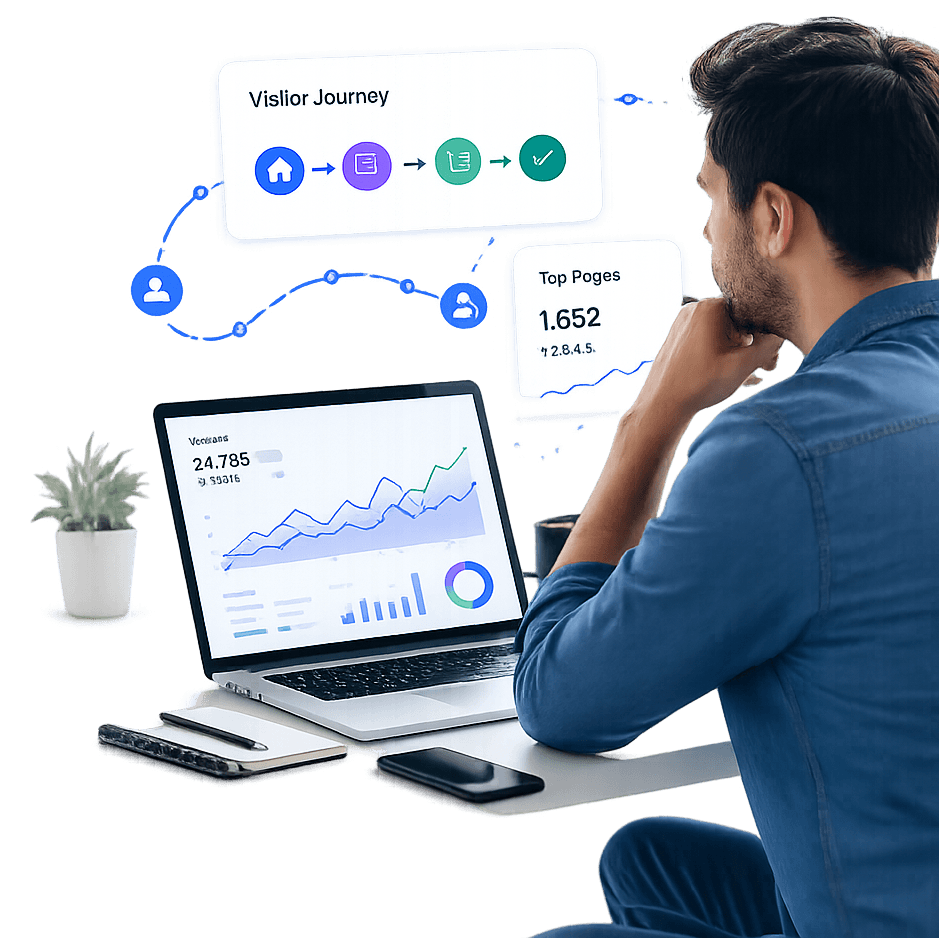
Marketing Without Data Is Like Driving Blind
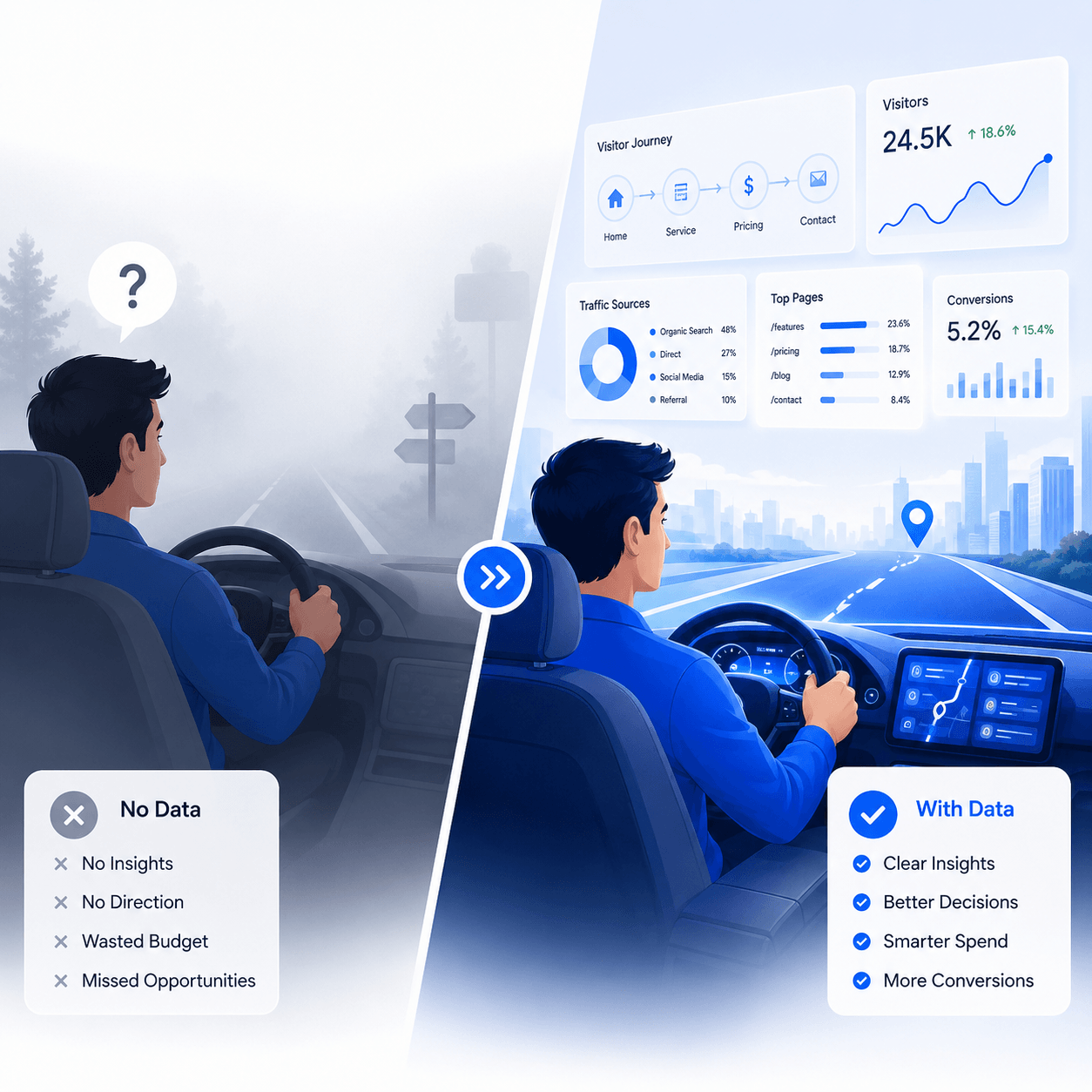
Imagine driving through an unfamiliar city at night without headlights or GPS. You might eventually reach your destination, but you’ll almost certainly take wrong turns, waste time, and consume more fuel than necessary.
Marketing works in much the same way.
When you don’t measure what happens after visitors arrive on your website, every decision becomes a guess. You don’t know which campaigns generate qualified leads, which pages encourage visitors to take action, or where potential customers lose interest and leave.
Instead of improving what’s already working, businesses often spend more money experimenting with new campaigns while the real problems remain hidden.
Website analytics removes that uncertainty by replacing assumptions with measurable insights.
What Website Analytics Actually Tells You
Modern website analytics is about much more than counting visitors. Every interaction helps you understand how people engage with your business online.
Rather than simply reporting traffic numbers, analytics reveals the complete picture of visitor behaviour, helping answer questions like:
- Where do your visitors come from?
- Which pages capture the most attention?
- Which campaigns generate qualified leads?
- Which forms and pages contribute to conversions?
- What actions do visitors take before becoming customers?
When viewed together, these insights help businesses identify opportunities, improve marketing performance, and create a better customer experience.
- Good marketing isn't built on assumptions—it is built on understanding visitor behaviour and making informed decisions.
The Hidden Cost of Not Tracking Visitor Behaviour
The cost of not using analytics isn’t always obvious.
Many businesses continue investing in campaigns that appear successful simply because they’re generating traffic. However, traffic alone doesn’t pay the bills.
Without tracking visitor behaviour, you may never realise that your highest-performing ad produces no enquiries, or that your most visited blog article has never generated a single lead.
Common examples include:
- Running paid campaigns that generate visitors but no conversions.
- Publishing content that attracts traffic without producing enquiries.
- Building landing pages without understanding why visitors leave.
- Investing more in underperforming marketing channels.
These hidden inefficiencies slowly reduce marketing ROI over time.
Every Marketing Channel Needs Analytics
Whether visitors discover your website through Google Search, social media, email campaigns, referrals, or direct visits, every marketing channel tells a different story.
Without analytics, it’s impossible to know which channels deserve more investment and which ones need improvement.
By analysing visitor behaviour across channels, businesses can compare traffic quality, engagement, conversions, and return on marketing investment. Instead of spreading budgets equally, they can focus resources where they generate the greatest business impact.
Data Helps You Improve Every Page
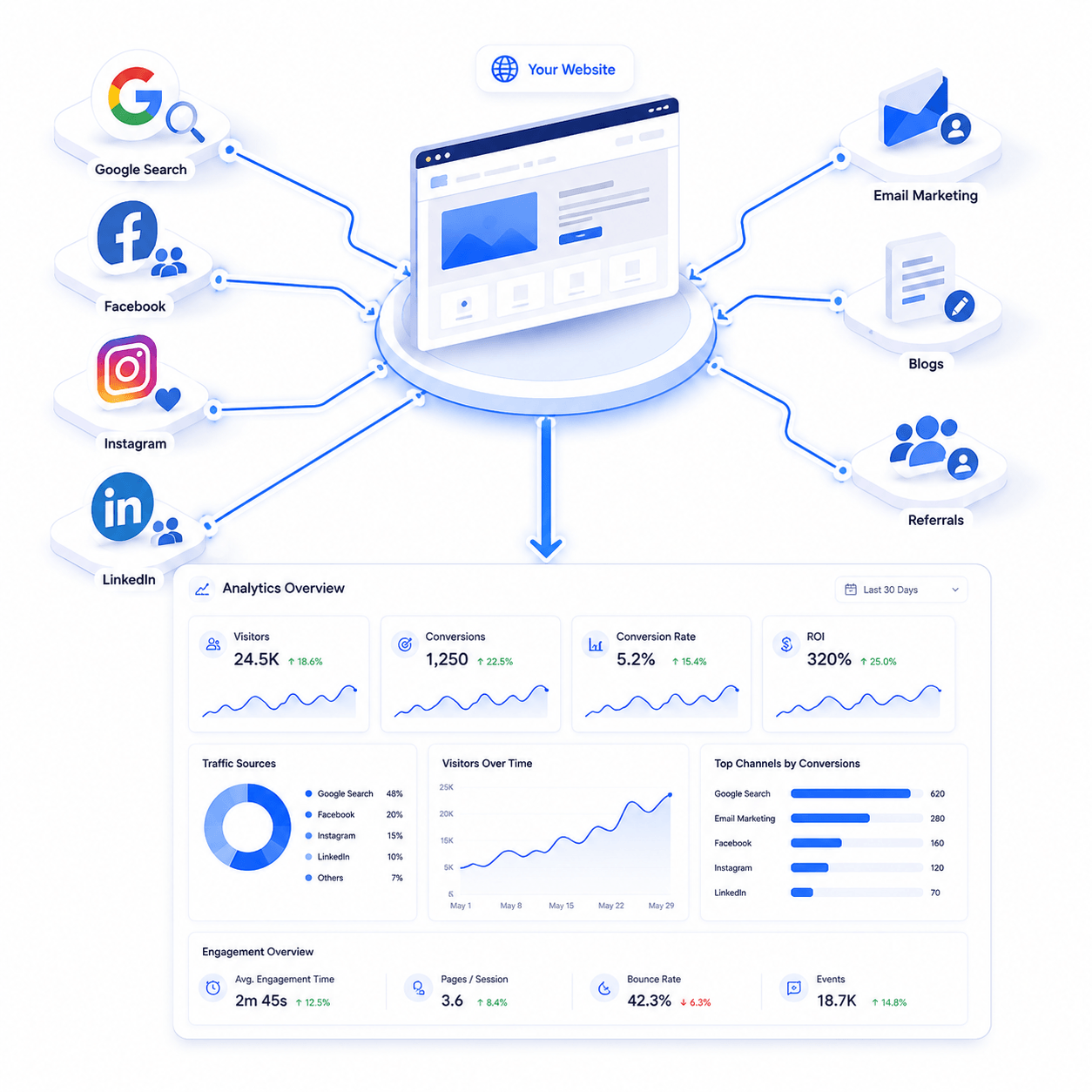
Whether visitors discover your website through Google Search, social media, email campaigns, referrals, or direct visits, every marketing channel tells a different story.
Without analytics, it’s impossible to know which channels deserve more investment and which ones need improvement.
By analysing visitor behaviour across channels, businesses can compare traffic quality, engagement, conversions, and return on marketing investment. Instead of spreading budgets equally, they can focus resources where they generate the greatest business impact.
- Small improvements based on real visitor insights often deliver bigger results than large marketing budgets spent on guesswork.
Better Marketing Starts With Better Questions
Many businesses measure success by asking:
“How many visitors did we receive this month?”
Successful businesses ask different questions.
They want to know which campaigns generated qualified leads, which content influenced conversions, where visitors abandoned their journey, and which pages deserve further investment.
When you start asking better questions, analytics provides better answers—and those answers lead to smarter marketing decisions.
Website Analytics Helps Every Business
Website analytics isn’t limited to large organisations with dedicated marketing teams.
Whether you’re running a local business, an ecommerce store, a marketing agency, a SaaS company, or a personal brand, understanding how visitors interact with your website helps you improve marketing performance and grow more confidently.
The size of your business doesn’t determine the value of analytics. Your willingness to make data-driven decisions does.
How Trackqle Helps
Trackqle brings together everything businesses need to understand website performance in one platform.
Instead of switching between multiple tools, you can monitor visitor journeys, page performance, events, goals, forms, marketing campaigns, and lead generation from a single dashboard.
If your website runs on WordPress, Trackqle also offers dedicated plugins including Trackqle Connect, PDF Resources Manager, and Author Performance, making it even easier to extend your website analytics and content insights.
FAQs
1. Why is marketing without data considered risky?
Without data, businesses make decisions based on assumptions instead of actual customer behaviour. Website analytics helps you understand which marketing efforts generate traffic, leads, and conversions, allowing you to invest your budget more effectively.
2. What data should businesses track to improve marketing performance?
Businesses should monitor key metrics such as visitor behaviour, traffic sources, page performance, form submissions, events, goals, conversions, and customer journeys. Together, these insights provide a clear picture of what’s working and what needs improvement.
3. Can website analytics help reduce marketing costs?
Yes. Website analytics identifies which campaigns, channels, and pages deliver the best results. This helps businesses reduce wasted marketing spend and focus their budget on activities that generate the highest return on investment.
4. Is website analytics only useful for large businesses?
No. Businesses of every size can benefit from website analytics. Whether you’re a startup, local business, marketing agency, ecommerce store, or SaaS company, understanding visitor behaviour helps you make smarter marketing decisions and improve business growth.
5. How can Trackqle help improve marketing decisions?
Trackqle provides detailed insights into visitor journeys, page performance, event tracking, form submissions, goal conversions, campaign performance, and lead generation. By bringing all this data together in one dashboard, businesses can make informed decisions that improve marketing performance and increase conversions.
Smarter insights,
Better decisions,
Real Growth
Track your website performance and unlock growth opportunities today.