

Introduction
Every website owner knows how many visitors their website receives.
But very few actually understand what those visitors do after they arrive.
- Did they find what they were looking for?
- Which pages did they visit?
- How far did they scroll?
- What did they click?
- Did they engage with your content?
- What convinced them to contact you?
- Why did they leave?
- Traffic tells you how many people visited. Visitor behavior tells you why they stayed—or why they left.
If you don’t understand visitor behavior, you’re making decisions based on assumptions instead of data.
In this guide, you’ll learn:
- What visitor behavior means
- Why it matters
- Which metrics you should monitor
- How visitor journeys improve conversions
- How to use behavior insights to grow your business
What Is Visitor Behavior?
Visitor behavior refers to every action users take while interacting with your website. Every page they visit, every click they make, and every form they submit tells a story about what they are trying to achieve. Instead of simply measuring how many people visit your website, visitor behavior focuses on understanding how they interact with it.
By analyzing these interactions, businesses can discover what captures attention, where users lose interest, and what ultimately encourages them to take action. This insight allows you to improve your website based on real user behavior rather than assumptions.
- Every click, scroll, and page visit reveals something about your visitor's intent. When analyzed together, these interactions help you understand what's working—and what needs improvement.
Why Visitor Behavior Matters
Imagine owning a retail store. You would naturally want to know which products customers look at, which sections of the store receive the most attention, where people spend the most time, and why some visitors leave without making a purchase.
Your website is no different.
Every visitor interaction provides valuable information about the effectiveness of your content, navigation, and marketing efforts. Without understanding visitor behavior, improving your website becomes little more than educated guesswork.
By tracking visitor behavior, you can:
- Improve user experience
- Increase conversions
- Reduce bounce rates
- Identify high-performing content
- Discover friction points
- Improve marketing ROI
The more you understand how visitors interact with your website, the easier it becomes to create experiences that guide them toward becoming customers.
Key Visitor Behavior Metrics You Should Track
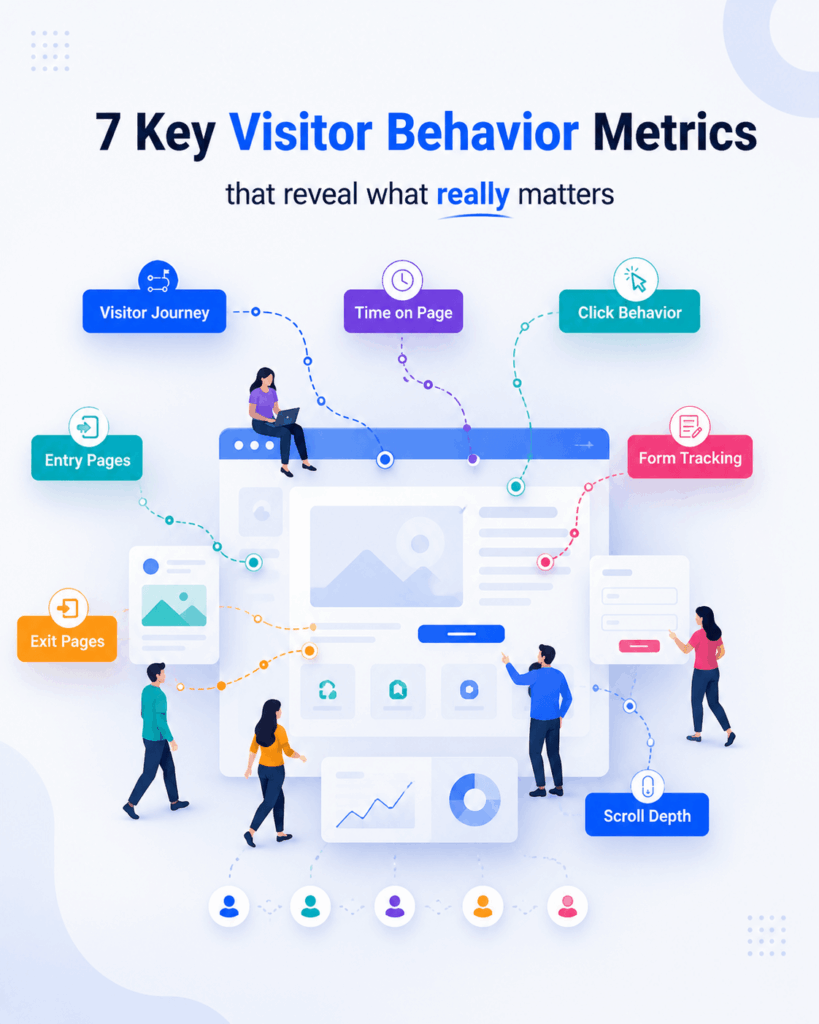
1. Visitor Journey
A visitor journey shows the sequence of pages someone visits during their session before leaving your website or completing a conversion. Rather than looking at individual page views, visitor journeys reveal the complete path users follow and help you understand how they move through your website.
Analyzing these journeys helps answer important questions such as:
- Which pages lead visitors toward conversion?
- Where do users abandon the journey?
- Which content keeps visitors engaged the longest?
2. Entry Pages
Many businesses assume that every visitor begins on the homepage. In reality, users often discover your website through search engines, social media, advertisements, or shared links, landing directly on internal pages instead.
Common entry pages include:
- Blog posts
- Landing pages
- Service pages
- Product pages
- Campaign URLs
Understanding which pages serve as entry points allows you to optimize first impressions and ensure visitors immediately find the information they’re looking for.
3. Exit Pages
Exit pages show where visitors leave your website. While every session eventually ends somewhere, unusually high exit rates on important pages often indicate that something is preventing users from continuing their journey.
Common causes include:
- Poor or incomplete content
- Weak calls-to-action
- Slow loading pages
- Confusing navigation
Identifying and improving these pages can have a significant impact on engagement and conversions.
4. Time on Page
The amount of time visitors spend on a page is one of the strongest indicators of engagement. When users stay longer, it often suggests they find the content useful and relevant. On the other hand, very short visits may indicate that the page failed to meet expectations.
Generally:
- Longer visits often indicate valuable content and strong engagement.
- Very short visits may suggest poor user experience, irrelevant content, or mismatched expectations.
Although time on page should never be viewed in isolation, it becomes highly valuable when combined with scroll depth and visitor journey data.
5. Scroll Depth
Many website owners assume visitors read every section of their content. Scroll tracking reveals whether that assumption is actually true.
It helps answer questions such as:
- Did visitors reach your call-to-action?
- Did they read the most important sections?
- Is the page longer than it needs to be?
These insights make it easier to improve content structure and position important information where visitors are most likely to see it.
6. Click Behavior
Every click represents a decision made by a visitor. Tracking click behavior helps identify what attracts attention, what users expect to happen next, and which elements are being ignored.
Common interactions worth monitoring include:
- Buttons
- Navigation menus
- Download links
- Contact links
- Resource links
- Add to cart buttons
Understanding click behavior allows you to improve navigation, optimize calls-to-action, and remove unnecessary friction throughout your website.
7. Form Interactions
Forms are often the final step before a visitor becomes a lead or customer, making them one of the most valuable elements to measure.
Instead of tracking submissions alone, monitor the complete performance of your forms, including:
- Form views
- Form submissions
- Highest-converting forms
- Best-performing pages
Understanding Visitor Intent
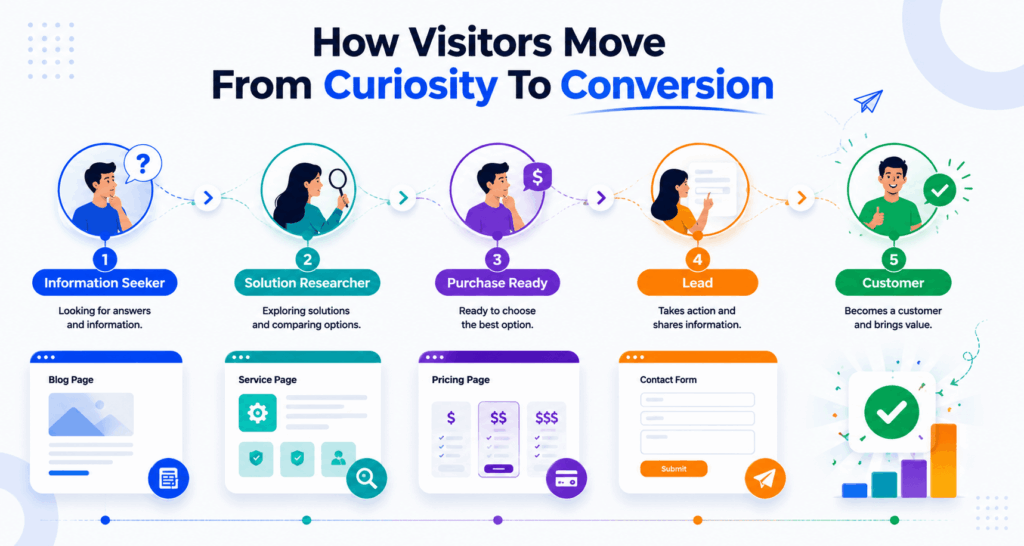
Not every visitor arrives with the same objective. Some people are simply researching a topic, while others are actively comparing providers or preparing to make a purchase.
In most cases, visitors fall into one of three categories:
Information Seekers are looking for answers, educational resources, or helpful content.
Solution Researchers are comparing products or services and evaluating different providers.
Purchase-Ready Visitors have already decided what they need and are ready to contact you, request a quote, or complete a purchase.
- Understanding visitor intent helps you deliver the right content at the right stage of the buying journey, creating a better experience while improving conversion rates.
How Visitor Behavior Improves Conversions
Imagine your website receives 1,000 visitors every month.
1,000 Visitors
↓
700 reach the Pricing Page
↓
Only 20 reach the Contact Page
This large drop-off immediately highlights a problem in the conversion journey.
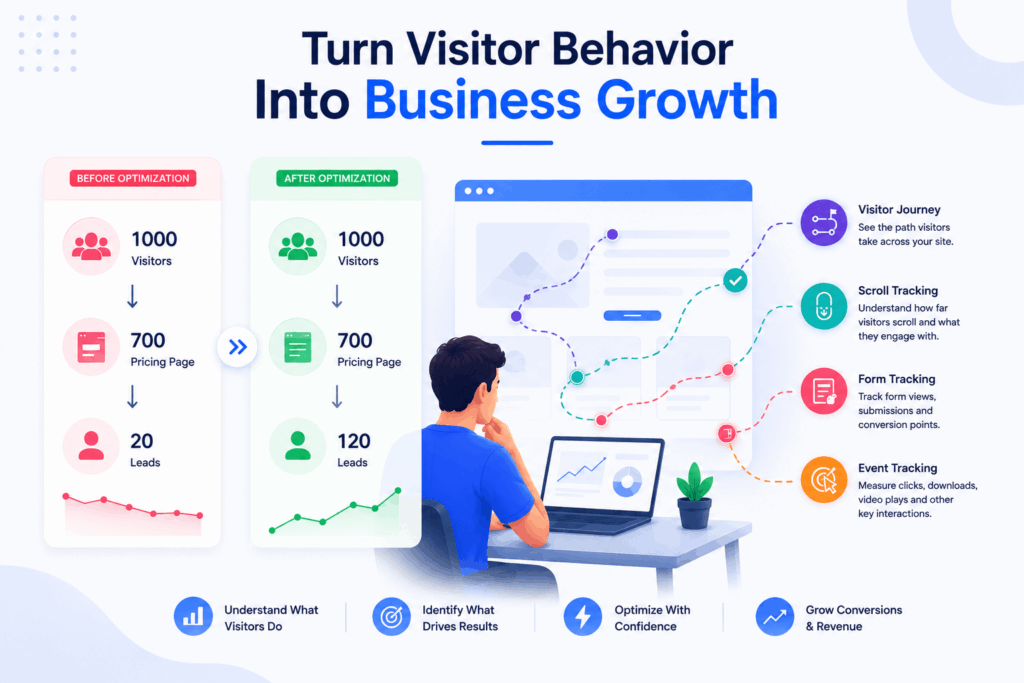
Without visitor behavior tracking, you would never know where potential customers are leaving your website. By analyzing visitor journeys and engagement data, you can identify the exact point where users lose interest and make improvements that guide more visitors toward conversion.
Common optimization opportunities include:
- Improving page messaging
- Simplifying navigation
- Strengthening calls-to-action
- Reducing friction throughout the buying journey
Even small improvements based on visitor behavior can lead to significant increases in leads and revenue.
Common Mistakes Businesses Make
Many businesses invest heavily in attracting visitors but spend very little time understanding what those visitors actually do once they arrive. As a result, they miss valuable opportunities to improve their website and increase conversions.
Some of the most common mistakes include:
Focusing Only on Traffic
Ignoring User Journeys
Visitors rarely convert during their first visit. Understanding the complete journey helps identify opportunities to improve every stage of the buying process.
Tracking Too Few Metrics
Page views alone cannot explain visitor behavior. A complete picture requires engagement data, scroll depth, events, visitor journeys, and conversion tracking.
Making Assumptions
Business owners often assume they know how visitors use their website, but real behavior frequently tells a different story. Data replaces assumptions with evidence.
Turning Visitor Data into Business Growth
Collecting visitor behavior data is only the beginning. The real value comes from using those insights to improve your website and marketing strategy.
Visitor behavior insights can help you:
- Improve website design
- Optimize content
- Increase conversions
- Strengthen marketing campaigns
- Enhance user experience
- Improve lead quality
Businesses that consistently analyze visitor behavior are able to make better decisions, deliver better user experiences, and achieve stronger long-term growth.
Final Thoughts
Your visitors are constantly communicating with you through their actions. Every page they visit, every button they click, and every form they submit provides valuable insight into what they want and how they interact with your website.
The challenge isn’t collecting data—it’s understanding what that data is telling you.
When you learn how to interpret visitor behavior, you stop making decisions based on assumptions and start optimizing your website using real evidence. That leads to better engagement, higher conversions, and stronger business performance.
- Traffic tells you how many people visited. Visitor behavior tells you why they stayed, what they wanted, and what convinced them to take action. That's where real growth begins.
FAQs
1. What is visitor behavior in website analytics?
2. Why is tracking visitor behavior important?
Tracking visitor behavior helps you understand what visitors are doing on your website instead of relying on assumptions. It reveals user journeys, engagement patterns, drop-off points, and conversion opportunities, allowing you to make data-driven improvements.
3. Which visitor behavior metrics should I monitor?
Some of the most valuable visitor behavior metrics include visitor journeys, entry pages, exit pages, page views, time on page, scroll depth, click interactions, event tracking, form submissions, and goal conversions. Together, these provide a complete picture of how users interact with your website.
4. How does visitor behavior improve website conversions?
Visitor behavior analytics helps identify where visitors lose interest, abandon pages, or fail to complete important actions. By optimizing navigation, improving content, strengthening calls-to-action, and reducing friction, businesses can increase conversions and improve overall website performance.
5. What tools can track visitor behavior?
Visitor behavior can be tracked using website analytics platforms that provide insights into user journeys, page engagement, events, scroll tracking, form submissions, and conversions. The right analytics solution helps businesses understand visitor intent and make informed decisions to improve marketing performance.
Smarter insights,
Better decisions,
Real Growth
Track your website performance and unlock growth opportunities today.