

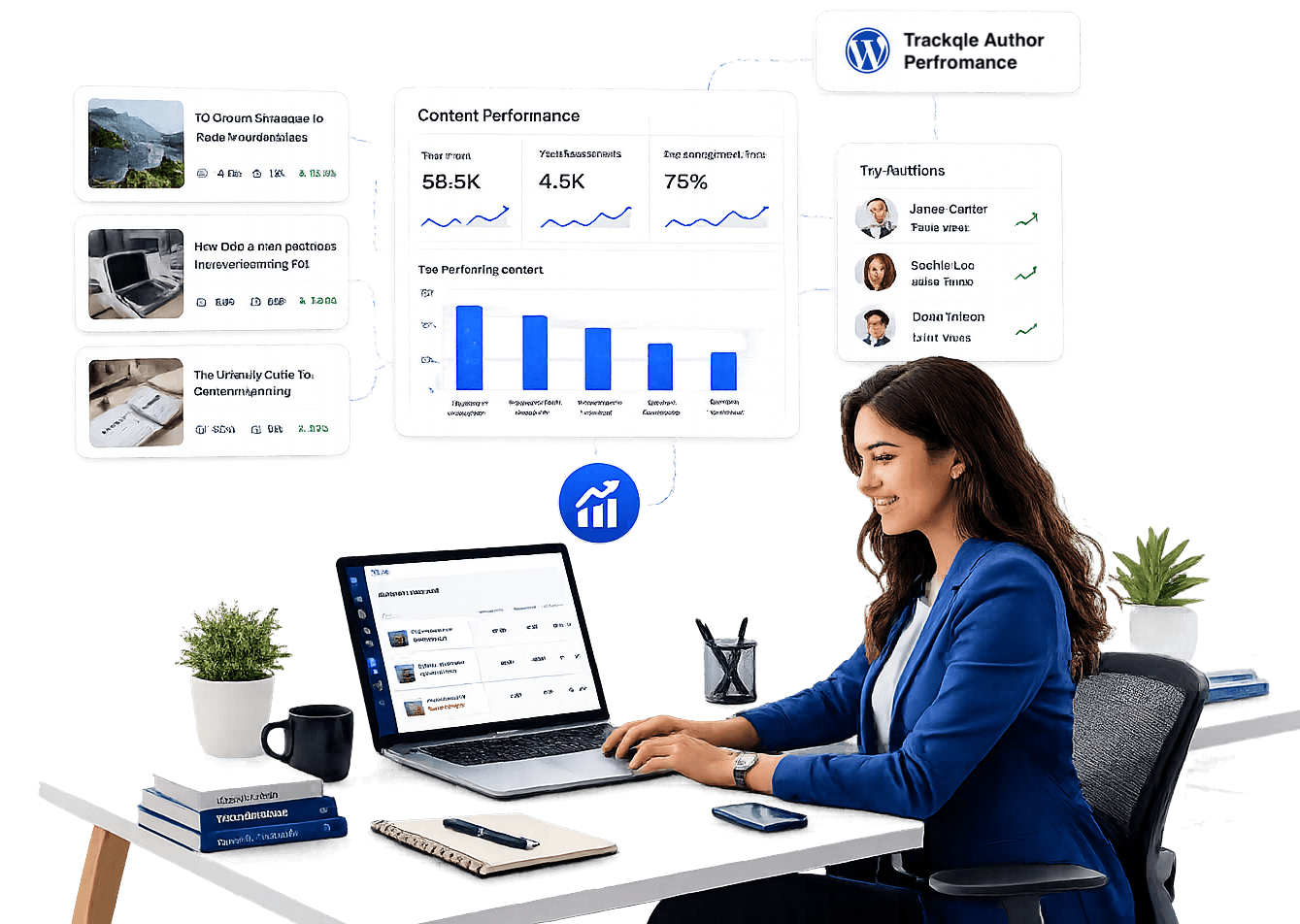
Introduction
Creating high-quality content takes time, creativity, and effort. Whether you’re publishing blog articles, landing pages, guides, or downloadable resources, every piece of content is created with a purpose.
But once it’s published, an important question remains:
How do you know if your content is actually performing?
Many businesses judge success by page views alone. While traffic is valuable, it only tells part of the story. A blog post with thousands of visitors isn’t necessarily successful if those visitors leave immediately or never take the next step.
Measuring content performance means understanding how people interact with your content, whether it keeps them engaged, and if it contributes to your business goals.
- Great content doesn't just attract visitors—it encourages them to engage, explore, and take action.
Why Measuring Content Performance Matters
Content marketing is an investment. Every article, video, case study, or downloadable guide requires time and resources to create.
Without measuring performance, you’re left guessing which topics resonate with your audience and which ones fail to deliver value.
Content analytics helps answer questions like:
- Which articles attract the most visitors?
- Which pages keep readers engaged?
- Which content generates leads?
- Which topics encourage visitors to continue exploring your website?
Instead of producing more content simply to stay active, you can focus on creating content that consistently delivers results.
Looking Beyond Page Views
Page views are often the first metric businesses check, but they should never be the only one.
Imagine two blog posts:
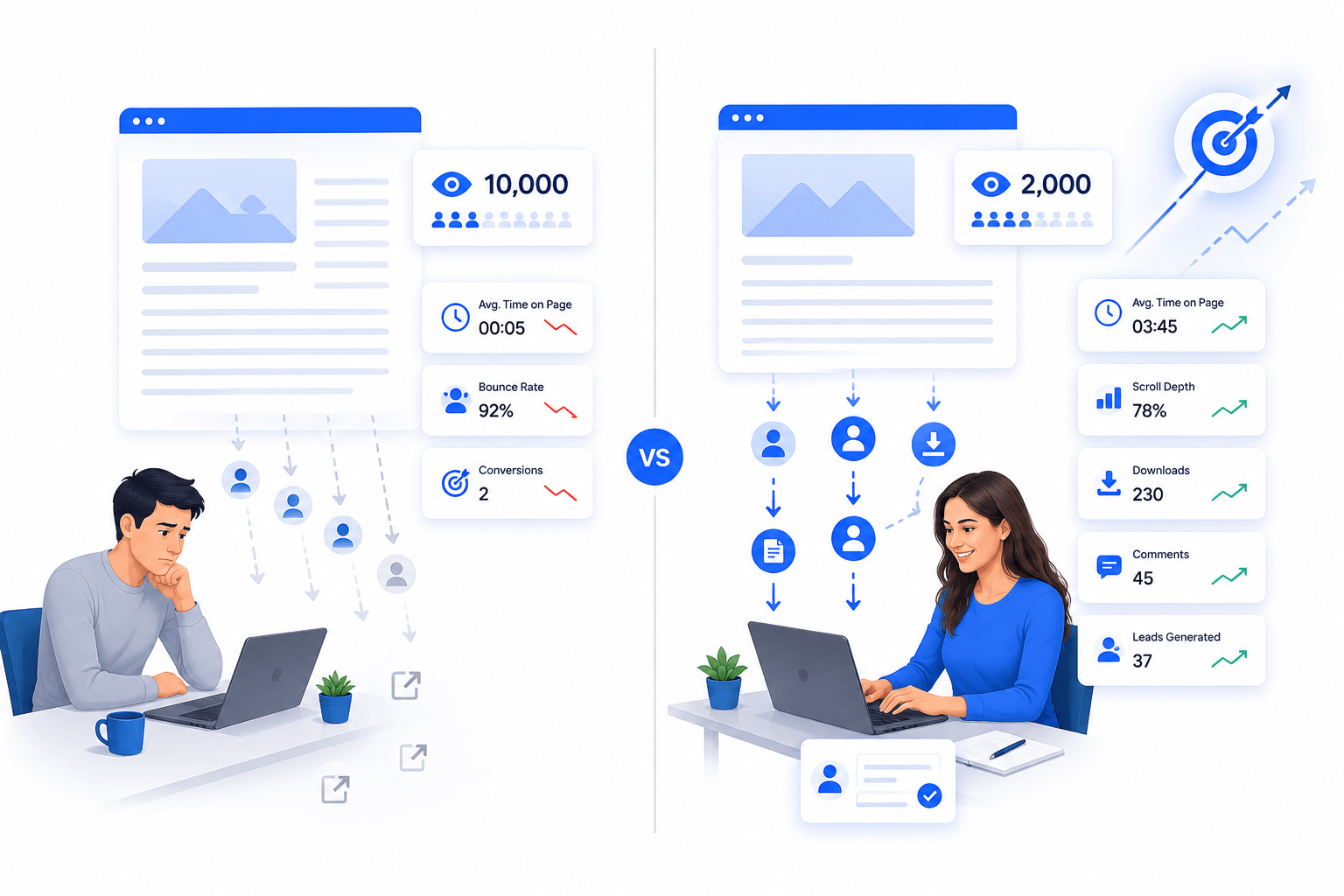
Blog A receives 10,000 visitors but most leave within a few seconds.
Blog B receives only 2,000 visitors, yet hundreds of readers continue to your services page and several become qualified leads.
Which article created more business value?
Most would choose Blog B.
That’s why content performance should always be measured using multiple engagement and conversion metrics—not traffic alone.
The Metrics That Actually Matter
Instead of focusing on vanity metrics, measure the indicators that reflect genuine audience engagement.
Some of the most valuable content performance metrics include:
- Organic traffic
- Average engagement time
- Scroll depth
- Visitor journeys
- Click-through rate to other pages
- Resource downloads
- Form submissions
- Goal completions
- Returning visitors
- Conversion rate
Looking at these metrics together provides a much clearer picture of how your content contributes to business growth.
-
Business Impact
The best-performing content isn't always the most visited—it's the content that creates meaningful business outcomes.
Every Piece of Content Should Have a Goal
Not every article is designed to generate leads immediately.
Some content is created to educate.
Some builds trust.
Some supports SEO.
Others encourage visitors to explore products or services.
Before publishing, define what success looks like for each piece of content.
For example:
- Educational blogs may aim to increase engagement.
- Landing pages should encourage enquiries or purchases.
- Downloadable guides may focus on generating leads.
- Case studies often build trust before conversion.
When every piece of content has a clear objective, measuring performance becomes much easier.
Understand the Complete Reader Journey
Content rarely works in isolation.
A visitor might discover your website through Google Search, read two blog articles, download a resource, return a few days later, and finally submit a contact form.
If you only measure page views, you’ll never understand how your content influenced that decision.
By tracking visitor journeys, businesses can identify which articles introduce visitors, which pages build trust, and which pieces of content contribute to conversions.
This provides valuable insights for improving future content strategies.

Continue Learning
If you’re building a data-driven marketing strategy, these guides may also help:
You can also explore Trackqle’s WordPress Plugins to better understand how content analytics, PDF tracking, and author performance measurement can help improve your content strategy.
How to Turn Content Insights Into Better Results
Collecting data is only valuable if you use it to improve your content.
Once you understand how readers interact with your articles, you can make informed decisions instead of relying on assumptions. Sometimes a small change—such as improving a headline, updating a call-to-action, or adding more helpful visuals—can significantly improve engagement and conversions.
Content analytics should become part of your regular marketing process, not something you check only once a month.
Ways to Improve Content Performance
- Updating outdated information.
- Improving headlines and introductions.
- Adding relevant visuals and examples.
- Strengthening internal links to related content.
- Including clear calls-to-action.
- Refreshing articles that already receive steady traffic.
Regular optimization often delivers better results than constantly publishing new content.
-
Take Action
The most valuable content is content that continuously improves. Review your analytics regularly and optimize what already works.
Common Mistakes When Measuring Content Performance
Many businesses either track the wrong metrics or stop measuring after publication. This often leads to missed opportunities for improvement.
Some common mistakes include:
- Focusing only on page views.
- Ignoring visitor engagement.
- Never reviewing older content.
- Not tracking conversions from content.
- Creating content without a clear objective.
- Measuring success too soon after publishing.
Avoiding these mistakes helps build a content strategy that delivers long-term value instead of short-term traffic spikes.
How Trackqle Helps Measure Content Performance
Understanding content performance shouldn’t require multiple tools or complicated reports.
Trackqle brings together the insights that matter most, helping you understand how visitors interact with your content and how that content contributes to your business goals.
With Trackqle you can measure:
- Visitor journeys across your content.
- Page-level engagement.
- Scroll depth and reading behavior.
- Resource downloads.
- Goal and conversion tracking.
- Form submissions generated by content.
- Campaign attribution.
- Author performance with the Author Performance WordPress plugin.
- PDF engagement with the PDF Resources Manager plugin.
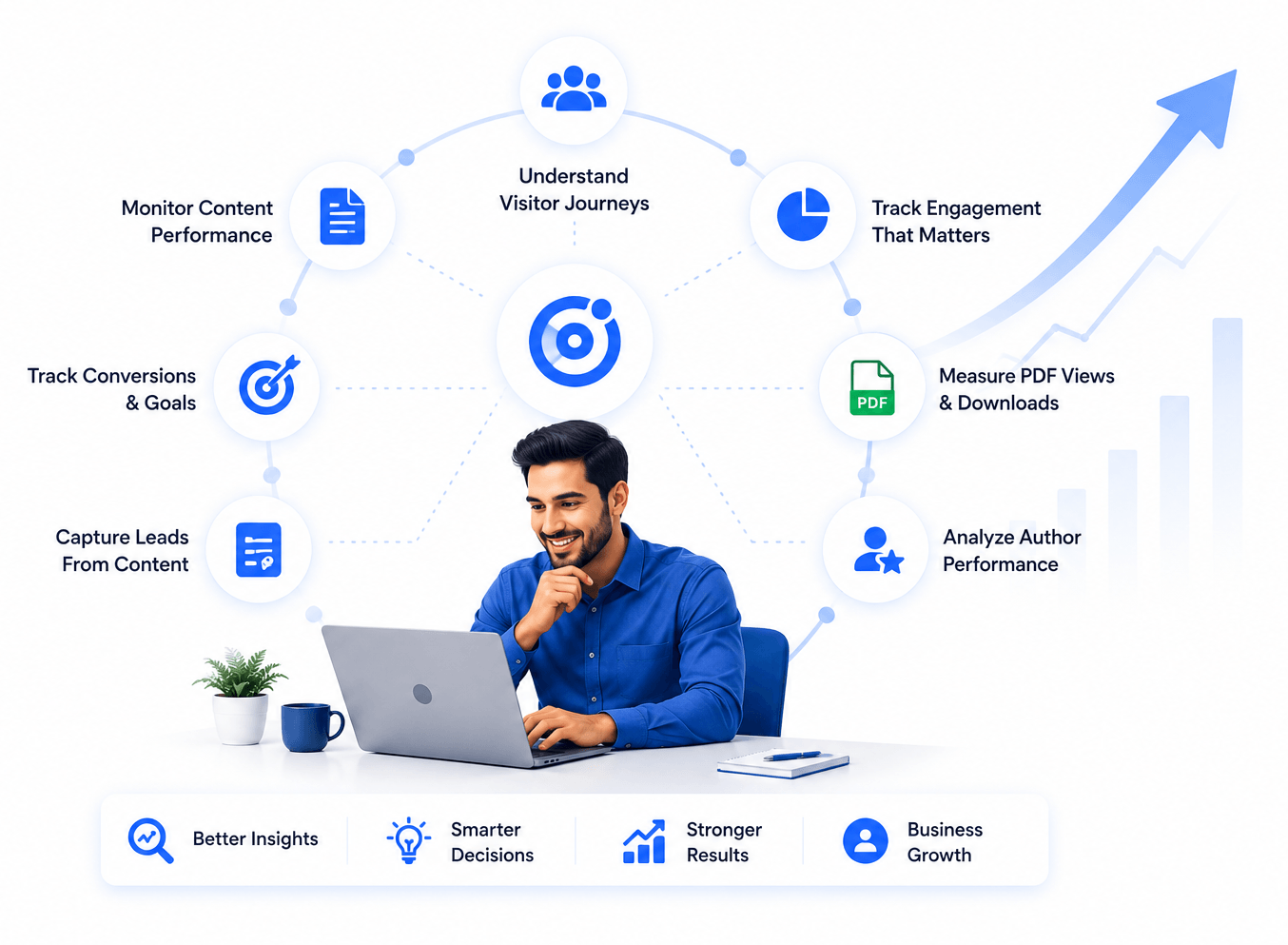
Instead of simply knowing how many people visited an article, you’ll understand how your content supports lead generation and business growth.
If you’re ready to measure content performance more effectively, explore the Trackqle Pricing page to find the plan that fits your business.
FAQs
1. What is content performance?
Content performance measures how effectively your content achieves its intended goals. This includes visitor engagement, time on page, conversions, lead generation, and overall contribution to your marketing objectives.
2. Which metrics are most important for measuring content performance?
Some of the most valuable metrics include engagement time, scroll depth, visitor journeys, conversion rate, form submissions, resource downloads, and returning visitors. These metrics provide a more complete picture than page views alone.
3. How often should I review content performance?
Review your content regularly, ideally every month. Consistent analysis helps you identify opportunities to update high-performing content, improve underperforming pages, and adapt to changing user behavior.
4. Can older content still generate business results?
Absolutely. Evergreen content often continues attracting visitors for months or even years. Updating and optimizing existing articles can improve their search rankings, engagement, and conversions without creating new content from scratch.
5. How does Trackqle help measure content performance?
Trackqle helps you understand how visitors interact with your content by tracking visitor journeys, page engagement, scroll behavior, conversions, form submissions, campaign attribution, and content performance insights—all in one platform.
Smarter insights,
Better decisions,
Real Growth
Track your website performance and unlock growth opportunities today.