
Why Every Business Should Track PDF Downloads and Resource Performance

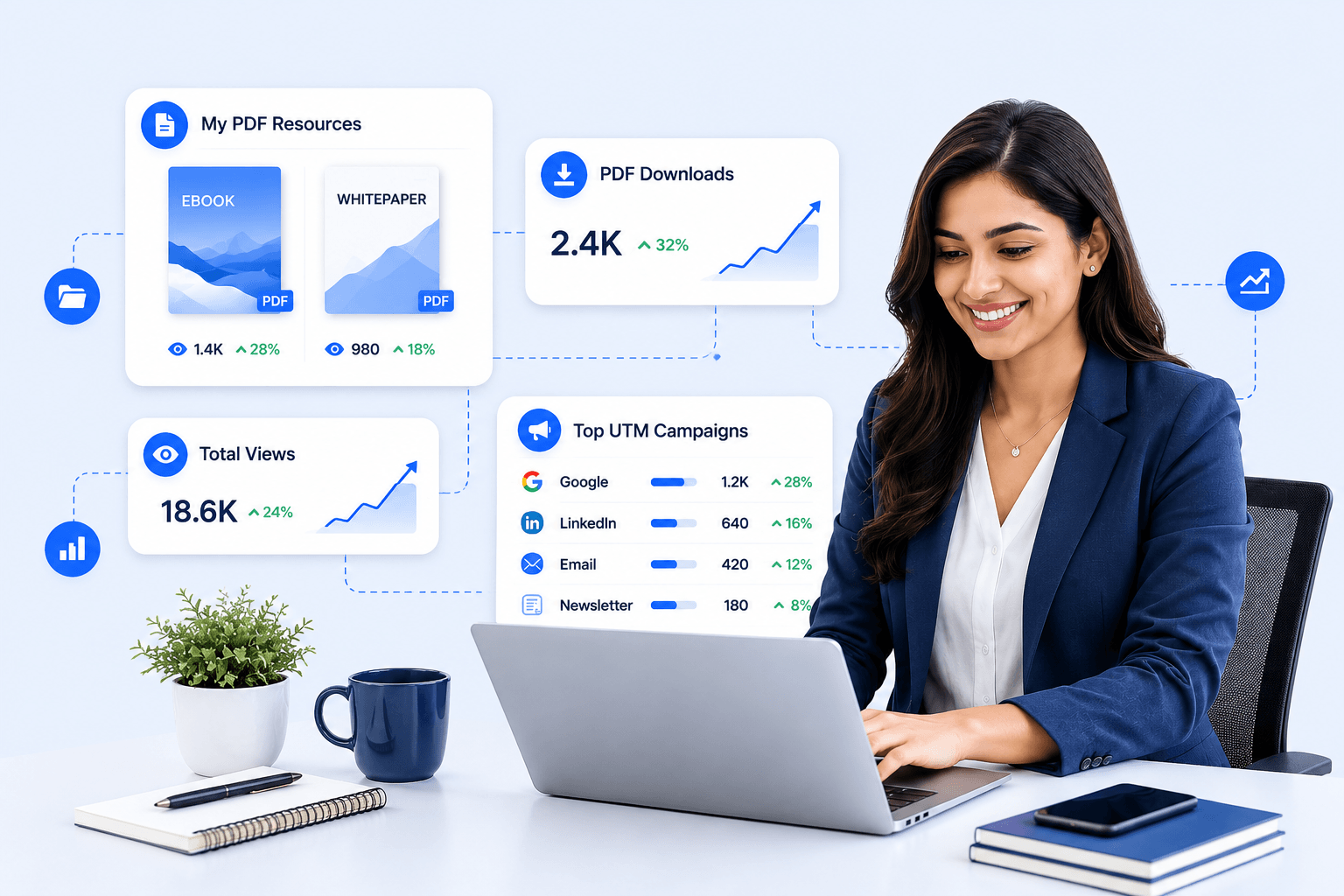
Introduction
Creating valuable downloadable content is one of the most effective ways to educate your audience, build trust, and generate qualified leads.
Businesses invest significant time creating eBooks, whitepapers, case studies, brochures, checklists, templates, product catalogs, and research reports because these resources provide lasting value beyond a single website visit.
But publishing a resource is only the beginning.
How do you know if people are actually downloading it?
More importantly:
- Which resources generate the most interest?
- Which marketing campaigns drive the most downloads?
- Which downloads eventually become leads or customers?
- Which resources should you update or promote more often?
Without measuring resource performance, you’re missing valuable insights that could improve both your content strategy and your marketing ROI.
- Every downloadable resource tells a story. Tracking how people discover and engage with it helps you create better content and smarter marketing campaigns.
Downloadable Content Is More Than Just a PDF
Many businesses think of downloadable resources as simple files attached to a webpage.
In reality, they’re powerful marketing assets.
A well-designed eBook can educate potential customers before they contact your sales team.
A case study can build credibility with decision-makers.
A whitepaper can position your business as an industry expert.
A downloadable checklist can encourage visitors to return to your website.
Each resource plays a different role within the customer journey, making it important to understand how each one performs.
Common downloadable resources include:
- eBooks
- Whitepapers
- Case studies
- Product brochures
- Buying guides
- Checklists
- Templates
- Research reports
- Product catalogs
- Technical documentation
When these resources are measured properly, they become much more than downloadable files—they become measurable business assets.

Why Measuring Resource Performance Matters
Imagine spending weeks creating a comprehensive industry guide.
You promote it through blog articles, email campaigns, LinkedIn posts, paid advertising, and your website homepage.
Downloads begin increasing.
That’s great news—but is it enough?
Not necessarily.
Downloads alone don’t tell the complete story.
To understand whether your content is truly successful, you need to measure what happens before and after someone downloads your resource.
Questions worth asking include:
- Which channel generated the download?
- Which landing page performed best?
- Which campaign delivered the highest-quality visitors?
- Which resources generate repeat engagement?
- Do downloaded resources contribute to enquiries or sales?
Answering these questions helps businesses invest more confidently in the content that delivers measurable results.
Content Syndication Works Best When It's Measurable
Great content shouldn’t exist in one place.
A single whitepaper can become a blog article, a LinkedIn post, an email campaign, a webinar topic, and several social media posts.
This process—often called content syndication—helps businesses maximize the value of every piece of content they create.
However, distributing content across multiple channels also creates a new challenge.
How do you know which channel performs best?
Without analytics, every campaign looks similar.
With proper tracking, you can compare downloads, engagement, traffic sources, and conversions across every distribution channel.
Instead of guessing where your audience prefers to engage, you can make decisions based on real data.

-
Business Impact
The most valuable resource isn't always the one with the most downloads—it's the one that creates the greatest business impact.
Every Download Is Part of a Larger Customer Journey
Very few customers discover your business, download a resource, and immediately make a purchase.
Most journeys happen gradually.
Someone may first discover one of your blog articles through Google Search. After reading the article, they download a related guide to learn more about the topic. A few days later, they return through an email newsletter, explore your services, read a customer success story, and finally submit a contact form.
Looking only at download numbers misses this bigger picture.
When resource analytics are connected with visitor behavior, businesses gain a much deeper understanding of how downloadable content contributes to trust, engagement, lead generation, and long-term business growth.
Continue Learning
If you’re building a stronger content marketing strategy, these articles are also worth reading:
Together, these guides explain how analytics transforms content from simply attracting visitors into generating measurable business results.
Which Resource Metrics Should You Track?
Tracking downloads is a great starting point, but it shouldn’t be your only metric. To truly understand resource performance, you need to measure how your audience discovers, engages with, and acts on your content.
Some of the most valuable metrics include:
- Total downloads
- Unique downloads
- Traffic sources
- Campaign performance (UTM tracking)
- Landing page conversions
- Returning visitors
- Resource views before download
- Form submissions generated
- Goal completions
- Lead generation from downloadable resources
When these metrics are viewed together, they reveal which resources genuinely contribute to your marketing and business goals.
Turn Downloadable Resources Into Lead Magnets
Many businesses publish resources simply because they have useful information to share.
High-performing marketing teams take a more strategic approach.
Every eBook, whitepaper, or case study should have a clear purpose—whether that’s educating prospects, building trust, capturing leads, or supporting the sales process.
Ask yourself:
- Does this resource solve a real problem?
- Does it encourage visitors to take the next step?
- Does it support a marketing campaign?
- Does it generate qualified leads?
When downloadable resources are created with a defined objective, measuring their success becomes much easier.
-
Take Action
Every resource should have a purpose. Track its performance, improve what works, and let data guide your content strategy.
Common Mistakes Businesses Make
Creating valuable content is important, but many businesses fail to maximize its impact because they never measure how it performs.
Some common mistakes include:
- Publishing resources without tracking downloads.
- Measuring downloads but not engagement.
- Ignoring campaign attribution.
- Never updating older resources.
- Treating every download as a successful conversion.
- Creating resources without clear business objectives.
Avoiding these mistakes helps ensure your content continues delivering value long after it’s published.
How Trackqle Helps Measure Resource Performance
Understanding how downloadable resources perform shouldn’t require multiple tools or complicated reporting.
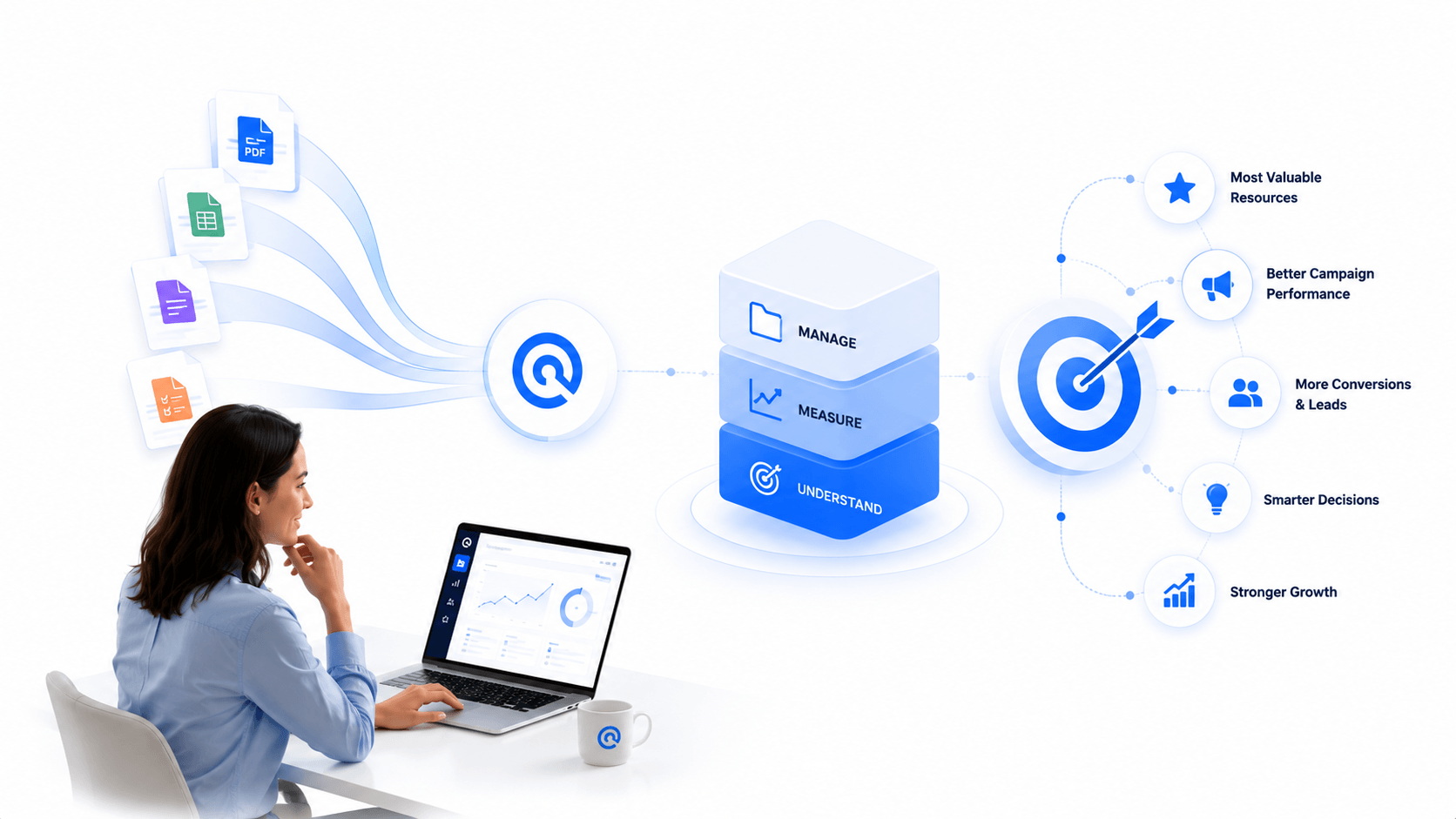
Trackqle’s PDF Resources Manager helps businesses organize, manage, and measure the performance of valuable downloadable content directly within WordPress.
Combined with Trackqle Analytics, businesses can understand:
- Which resources receive the most views.
- Which files are downloaded most often.
- Which marketing campaigns generate downloads.
- Which traffic sources perform best.
- How downloadable content contributes to lead generation.
- Which resources deserve additional promotion or updates.
Together with Trackqle Connect, visitor analytics, and Author Performance, businesses gain a more complete view of how content contributes to marketing success.
To learn more about these capabilities, explore the PDF Resources Manager page, browse our WordPress Plugins, or compare plans on the Trackqle Pricing page.
FAQs
1. Why should businesses track PDF downloads?
Tracking PDF downloads helps businesses understand which resources attract the most interest, support marketing campaigns, and contribute to lead generation. It turns downloadable content into measurable marketing assets instead of static files.
2. What types of downloadable resources should be tracked?
Businesses should measure the performance of eBooks, whitepapers, case studies, brochures, templates, checklists, buying guides, research reports, product catalogs, and any other resource intended to educate or engage potential customers.
3. Is download count the only metric that matters?
No. Downloads are only one part of the story. Businesses should also track traffic sources, landing page performance, campaign attribution, visitor journeys, engagement, and conversions to understand the true impact of each resource.
4. How does content syndication improve resource performance?
Content syndication distributes the same resource across multiple channels such as blogs, email campaigns, LinkedIn, social media, and newsletters. Tracking performance across these channels helps identify where resources generate the greatest engagement and business value.
5. How does Trackqle help measure downloadable resource performance?
Trackqle combines resource management with analytics to help businesses measure PDF views, downloads, campaign performance, visitor behavior, and lead generation. This provides a complete picture of how downloadable content contributes to business growth.
Smarter insights,
Better decisions,
Real Growth
Track your website performance and unlock growth opportunities today.
Stop Treating Your Resources Like Static Files
Your eBooks, whitepapers, brochures, and case studies contain valuable insights—not just for your audience, but for your business. Start measuring how they’re discovered, downloaded, and contributing to your marketing success.
Measure every download. Improve every campaign.